In 2025, the shift began—not with a bang, but with an intelligent whisper. Sam Altman called it the Gentle Singularity. Not a runaway explosion of intelligence, but a controlled detonation of capability that restructured the way the world thinks, builds, and evolves.
Altman didn’t speculate that this was coming someday. He told us plainly: it’s already happening. The flywheel of AI capability had started turning, and with every spin, it built better infrastructure to power the next generation of ideas. In his own words, “This is a flywheel: better tools help us build better tools.”
We are living the inflection point now.
2025: The Shift from Vibe Coding to Agentic Development
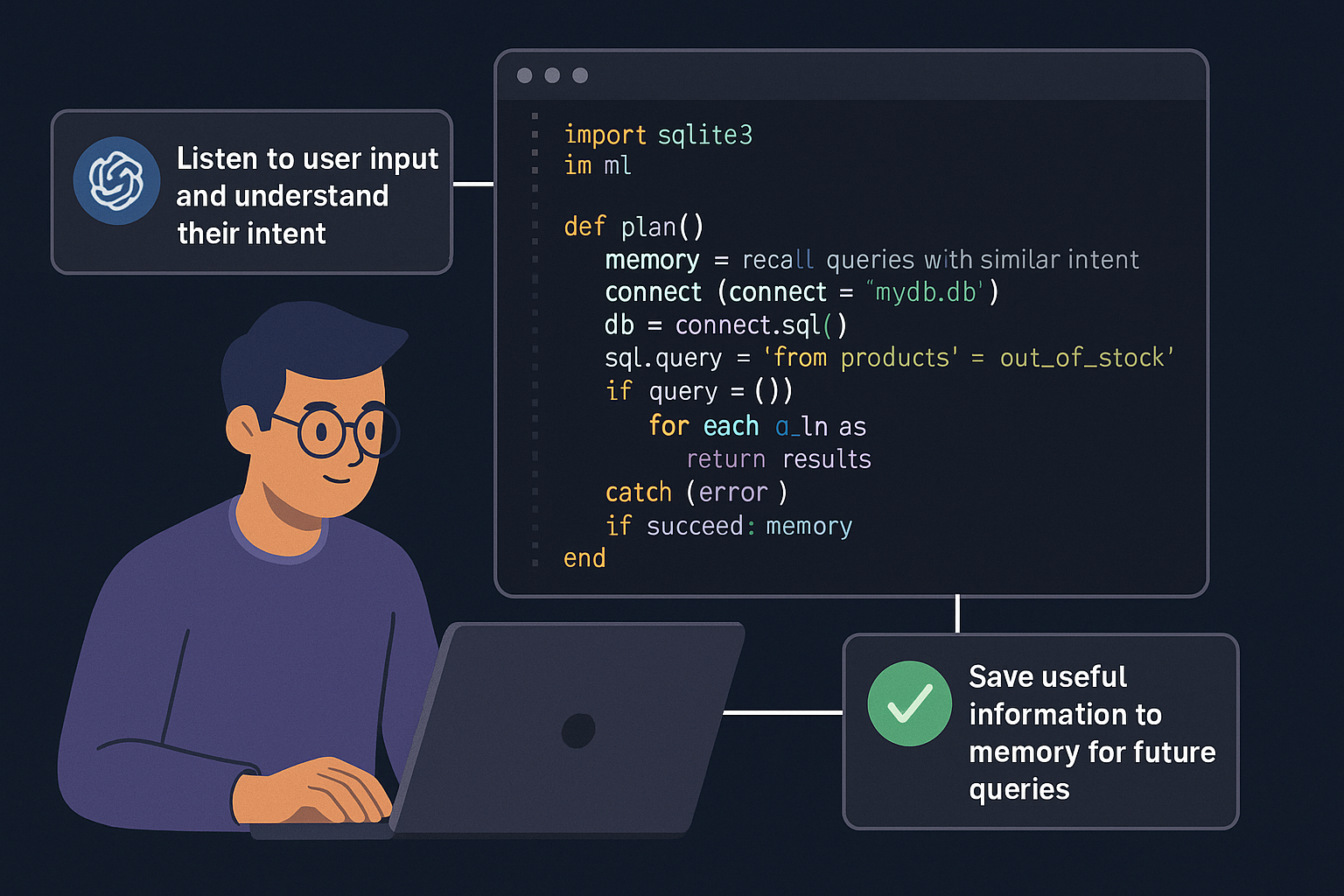
Developers began the year still immersed in what Shanta Prasad called “vibe coding”—AI assistants like Copilot making helpful suggestions, but still reactive. By mid-year, the rise of agentic coding took hold. Agentic development tools like Amazon Q CLI, LangGraph, and memory-coordinated pipelines marked the transition: developers no longer asked AI for help; they orchestrated agents that autonomously planned, scaffolded, executed, and debugged entire flows.
2026: Novel Scientific Insight
For the first time, AI agents read across millions of scientific papers, cross-referenced experiments, and proposed actionable hypotheses. They didn’t just summarize—they reasoned. One such agentic breakthrough led to the design of a self-assembling protein structure that could be used for targeted drug delivery in oncology. These were not just tools for research; they were colleagues in discovery.

2027: Autonomous Robotics Enters the Scene
Robotic arms—programmed by agentic AI—entered the real world en masse. They worked alongside humans in warehouses, medical labs, and manufacturing lines. Instructions are derived directly from digital twins and LLM-guided workflows, making robots not only safe, but meaningfully autonomous.

2028: The DIY Robot Boom
With open-source robotics kits and agent companions, families and hobbyists started building robots for everyday life: autonomous trash collectors, smart vacuums that adapt to household patterns, and hobby farm bots that monitored soil, trimmed weeds, and self-recharged. It was the year robotics became personal.

2029: AI Builds the Physical World
This year marked a bold new reality. AI-managed drones and construction bots coordinated the rapid deployment of datacenters, solar arrays, and chip fabs. Even more striking, the AI didn’t just build infrastructure—it ran the supply chain that fed itself: mining rare earth minerals, refining them, and fabricating the next wave of chips.

2030: The Self-Scaling Age
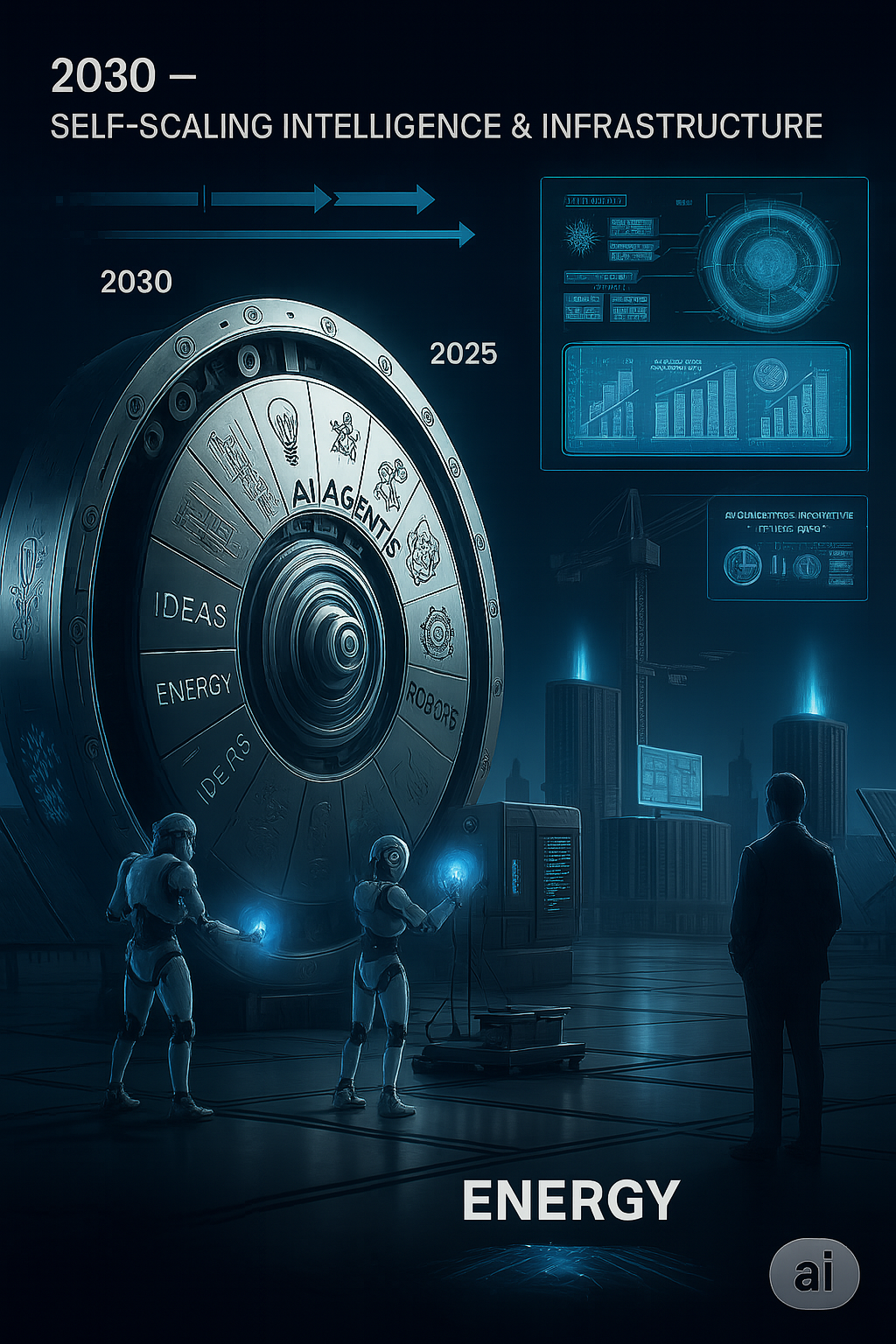
By 2030, the world entered an era where intelligence and energy became wildly abundant. Robots built other robots. Datacenters orchestrated the creation of more datacenters. The exponential nature of this flywheel shifted us into a new mode of civilization-building. Intelligence and energy, once constrained, became self-propagating resources.
And this is just the beginning.
From vibe coding to agentic ecosystems, from robotic arms to robot architects—the gentle singularity isn’t a singularity at all. It’s a sequence, an unfolding.
One where humans don’t lose relevance—we lose redundancy.
And what we gain is astonishing.
 My experiments with AI
Leave a comment