Science fiction promised us flying cars by 2025—think The Jetsons or Back to the Future, where we’d soar above the chaos. Instead, we’re still crawling through gridlock, losing hours to commutes that sap our energy and time.
Even in cutting-edge cities like New York, getting around feels like a battle. But AI is rewriting the rules of transportation, turning frustration into fluid motion for both people and goods.
🏙️ NYC’s Chaos: The Urban Hustle
Step into New York, and you’re swept into a whirlwind. Crowds surge for trains, cabs vanish in the rain, and every second feels like a race. The city’s pulse is thrilling but exhausting—space is scarce, costs are steep, and moving around is a grind. This is urban life today, barely touched by the tech we expected to transform it.

🌠 Dreaming Big: A City That Flows
Picture a reimagined New York, inspired by The Jetsons. AI-powered platforms whisk you through streets without a honk or delay. You glide past skyscrapers, unhurried, while drones zip your coffee order to your side. Rooftop gardens cool the air, replacing concrete heat. This isn’t a distant fantasy—AI is already laying the groundwork.
🚖 Autonomous Roads and Freight: The AI Takeover
AI is reshaping how we move, blending innovation with practicality to revolutionize both passenger travel and global logistics.
Self-Driving Rides: The Future Is Here
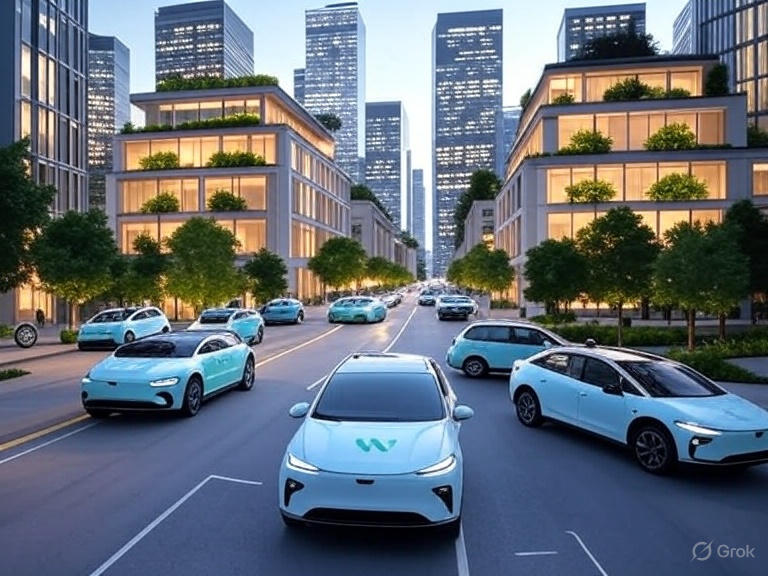
In cities like Phoenix, San Francisco, and Los Angeles, Google’s Waymo is redefining travel. Driverless cars—no steering wheels, no human error—glide through streets, picking up passengers with quiet precision. This isn’t just a ride; it’s a preview of cities where traffic jams, parking woes, and accidents fade away. Waymo is doing to Uber what Uber once did to taxis, making ride-hailing smarter and smoother.
Freight’s Smart Shift
On the highways, AI is transforming freight. A Marketplace Tech episode spotlighted Canada’s trucking industry, where AI platforms now connect drivers directly to jobs, cutting out middlemen and boosting efficiency. These apps mirror Uber’s disruption of taxis but on a massive scale, streamlining global supply chains. Beyond logistics, AI studies drivers’ habits—routes, breaks, decisions—to train models for autonomous trucks. The future? Fleets that drive themselves, delivering goods without delay.

🔄 The Grand Vision: Frictionless Movement
AI isn’t just about apps or self-driving vehicles; it’s building a seamless transportation ecosystem. From delivery drones to smart warehouses to urban transit, every piece learns and adapts in real time. The result? A world where goods and people move without the chaos of today’s systems.
🌟 Looking Ahead: A New Era of Travel
Transportation has long been a measure of progress, but our dreams of flying cars outran reality. AI offers something better: a system that’s intelligent, intuitive, and calm.
- Cities will pulse with smarter pedestrian flows, optimized transit, and autonomous rides.
- Logistics will hum with precision—fewer delays, sharper routes, and resources stretched further.
- The future isn’t about gimmicks; it’s about movement that feels effortless, reclaiming our time and sanity.
This is the real revolution—not cars in the sky, but a world that moves like it’s alive.
🎧 Sources
- Marketplace Tech podcast: AI and Trucking in Canada
- Waymo: https://waymo.com
 My experiments with AI
Leave a comment