
From Nuclear Roots to Digital Frontier
For the first time since World War II, the United States is treating scientific infrastructure itself as a strategic instrument of national power; this time powered not by uranium, but by artificial intelligence.
In 2025, the United States took a decisive step in the global race for technological leadership with the launch of a sweeping federal initiative that policymakers and scientists alike have begun calling Manhattan Project 2.0. At its core is a national strategy to harness artificial intelligence (AI) not merely as a commercial engine, but as the foundation of future scientific discovery, national security, and economic competitiveness.
This effort, known as the Genesis Mission, marks a strategic pivot away from a purely private-sector model of AI development toward a coordinated coalition of government, national laboratories, academic institutions, and industry all aligned around a unified scientific objective.
The historical parallel is intentional. Just as the original Manhattan Project reorganized America’s scientific capacity to meet an existential challenge, today’s AI infrastructure build-out follows the same logic: when the stakes are national in scale, discovery itself must become a national capability.
In Manhattan Project 2.0, the documentary highlights how national laboratories, places once dedicated primarily to nuclear research now house some of the world’s most powerful computing and experimental facilities.
Two flagship capabilities illustrate this shift:
- Supercomputers like Frontier: Massive exascale systems capable of training advanced AI models and simulating complex scientific phenomena.
- Neutron scattering facilities: Large-scale experimental devices that, when combined with machine learning, can map materials at ultra-fine resolution, enabling new efficiencies in manufacturing, materials science, and energy systems.
These facilities are not relics of past scientific triumphs; they are foundational infrastructure for a future in which AI and computational science extend human capability faster than ever before.
Genesis: A Strategic Answer to Global Competition
Perhaps the most profound implication of the Genesis Mission is what it signals about the future of scientific work.
Instead of AI serving as an auxiliary tool used intermittently in research, it becomes a core scientific partner:
- Reasoning across massive, multidomain datasets
- Optimizing experimental hypotheses before physical testing
- Automating complex workflows that once required years of manual iteration
- Compressing years of discovery into weeks of computational exploration
This is not incremental progress. It represents a structural shift in how science advances from discovery constrained by laboratory throughput to discovery scaled by compute.
The Genesis Mission was established by a presidential Executive Order signed on November 24, 2025. The initiative is officially described as a national effort to accelerate AI-enabled scientific discovery and elevate American technological leadership in the 21st century
(whitehouse.gov).
Genesis establishes a unified scientific platform that connects the world’s most powerful supercomputers, advanced AI systems, experimental facilities, and national datasets. Its stated objective is explicit: to double the productivity and impact of American research and innovation within a decade by pairing scientists with intelligent systems capable of reasoning, simulating, and experimenting at unprecedented speed.
The initiative focuses on three core pillars: American Energy Dominance, Advancing Discovery Science, and Ensuring National Security.
Key Scientific Priority Domains
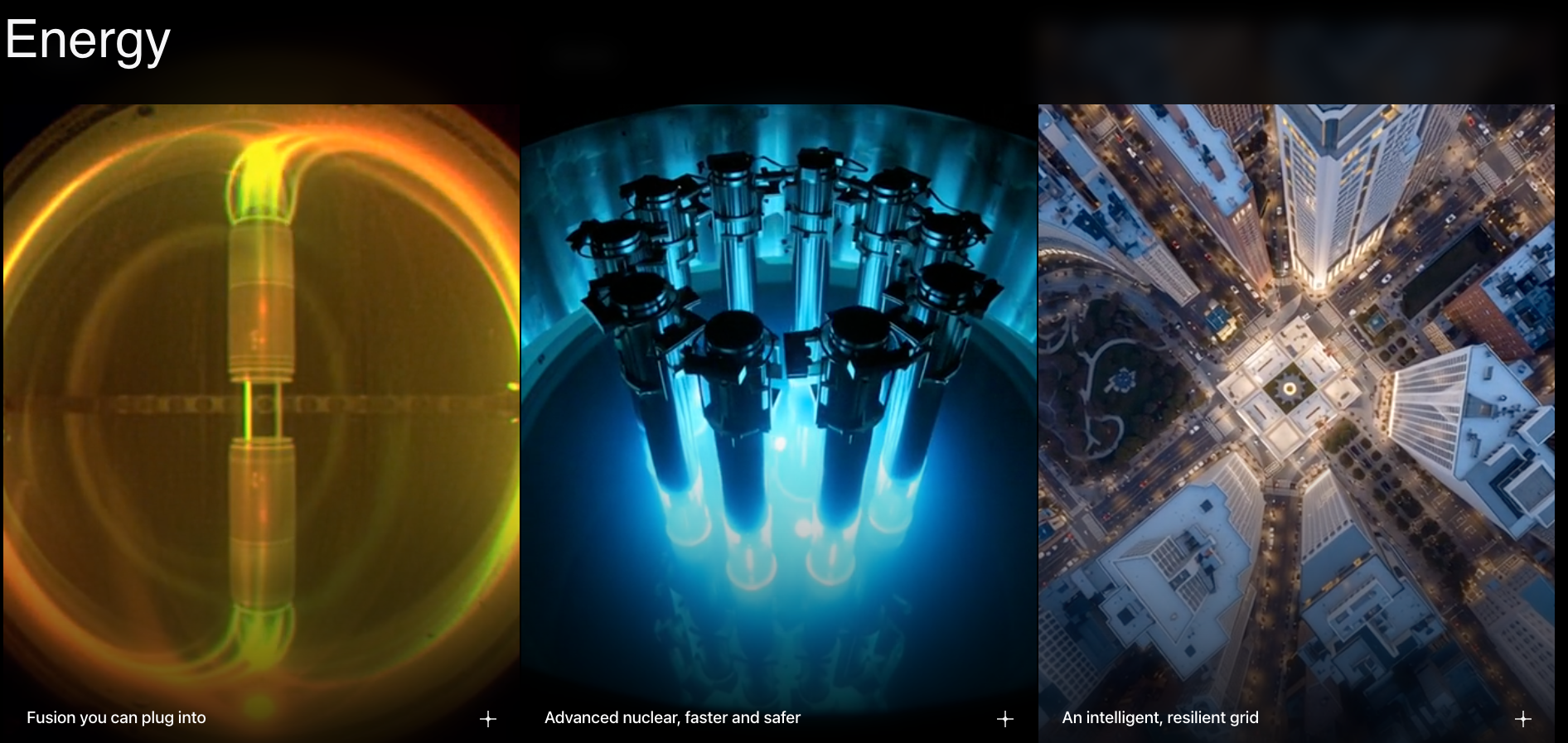
The Department of Energy (DOE) is specifically tasked with addressing challenges in these six areas:
- Nuclear Fission and Fusion Energy: Accelerating the design of next-generation small modular reactors (SMRs) and stabilizing fusion reactor experiments through real-time AI-guided control.
- Biotechnology: Speeding up bioengineering, genomic modeling for drug discovery, and pandemic readiness by analyzing vast health and biological datasets.
- Critical Materials: Using AI to discover substitutes for rare elements and developing domestic supply chains for essential industrial materials.
- Quantum Information Science: Building a “quantum ecosystem” to discover new algorithms and advance practical quantum computing capabilities.
- Semiconductors and Microelectronics: Accelerating the design and manufacturing of advanced 3D chips and microelectronics vital for the AI revolution.
- Advanced Manufacturing: Utilizing AI-driven “digital twins” and autonomous labs to cut the qualification time for new materials and production processes.
The impetus for the Genesis Mission is geopolitical as much as technological. U.S. leaders increasingly regard AI leadership as a national security priority, particularly amid intensified competition with China, which has dramatically expanded state-directed investments across AI, energy, and semiconductor manufacturing (CSIS).
Rather than leaving AI innovation solely to Silicon Valley and fragmented private research efforts, the Genesis Mission formalizes a mission-driven national model; one that treats AI as critical infrastructure rather than optional software.
The objective is clear: accelerate discovery, amplify U.S. scientific output, and reduce strategic dependency on foreign technological ecosystems.
⚛️ Nuclear Reactor Design: Digital Proof Before Physical Construction
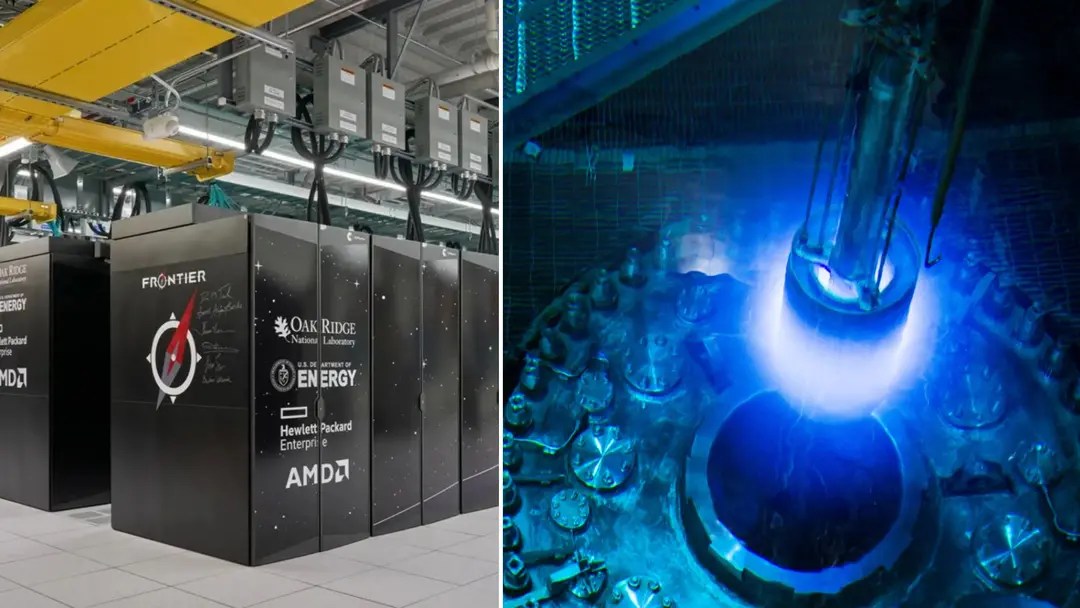
A flagship use case demonstrated under the Manhattan Project 2.0 framework is advanced nuclear reactor modeling.
Using frontier-scale supercomputers such as Frontier at Oak Ridge National Laboratory, AI systems can model entire reactor architectures before a single physical component is fabricated. These simulations integrate:
- Neutron transport and reactor physics
- Thermal and mechanical stress behavior
- Materials performance under extreme radiation and heat
- Long-term operational stability and safety margins
Thousands of reactor configurations can be evaluated computationally, allowing researchers to identify optimal designs and validate performance characteristics before construction begins.
At Oak Ridge National Laboratory, Frontier has already been used to model a Tennessee Valley Authority (TVA) nuclear reactor core before operational changes were made. When the reactor was subsequently started, the real-world behavior closely matched the AI-driven simulation.
That validation marks a fundamental shift. Instead of relying on conservative physical trial-and-error, reactor performance, safety margins, and efficiency improvements can now be explored on the computer first, dramatically narrowing the solution space before any physical intervention occurs. In practical terms, this means fewer costly experiments, faster regulatory confidence, and safer deployment of next-generation fission and modular reactor designs.
⚙️ AI-Driven Optimization of Physical Systems
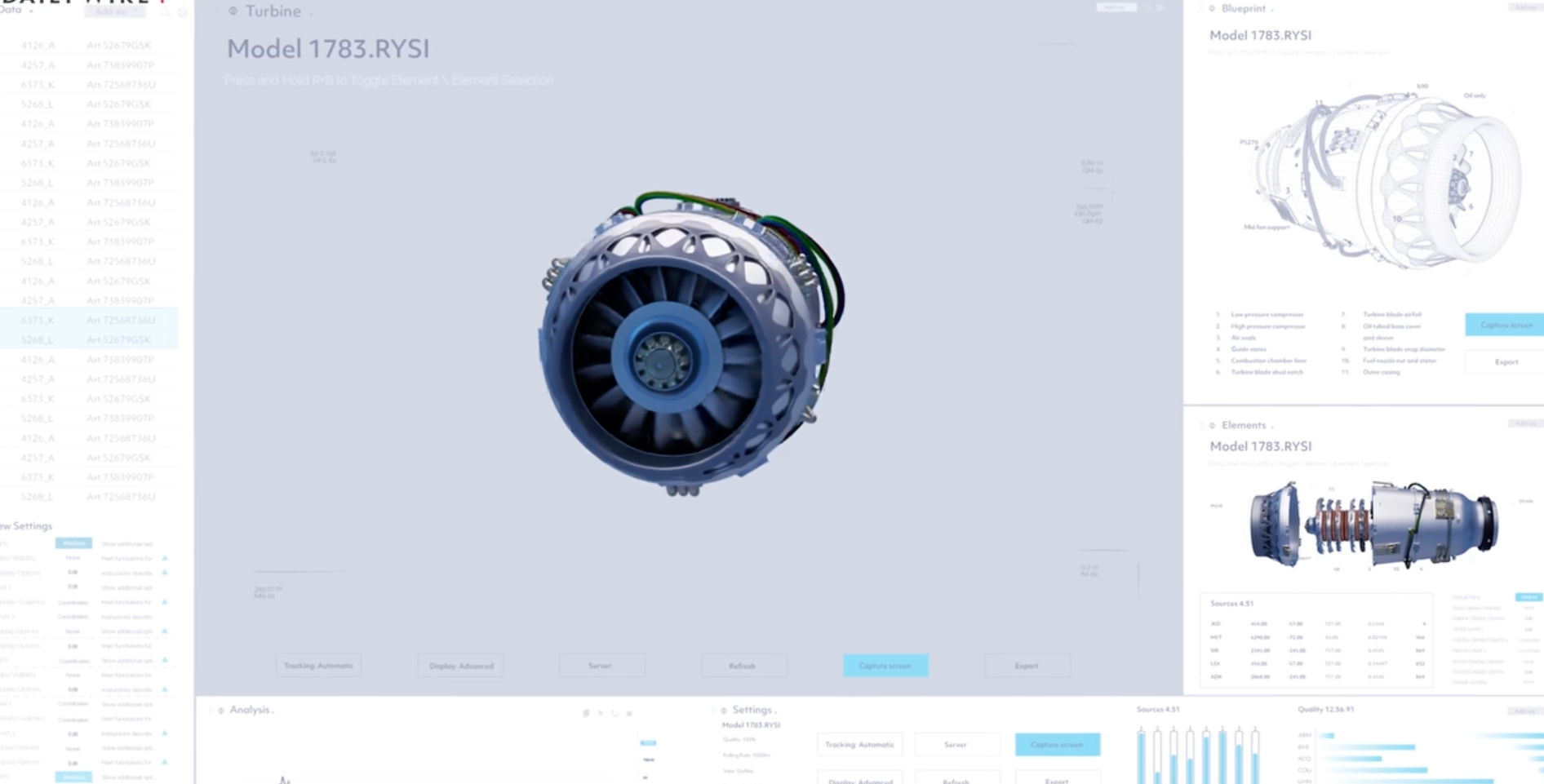
Seeing Inside Matter: Neutron Scattering and AI
A critical but often overlooked component of this new scientific capability is Oak Ridge’s neutron scattering infrastructure.
At the neutron scattering facility, materials and mechanical systems are placed into intense neutron beams that probe their atomic structure. As neutrons pass through a sample, they scatter in patterns that reveal at extraordinarily fine resolution where atoms are positioned, how they move, and how they respond to stress, heat, and radiation.
What makes this capability transformative is its integration with machine learning. The raw neutron data is converted into high-dimensional datasets that AI systems can interpret, correlate, and analyze at scale. Rather than relying solely on static experiments, AI can dynamically steer experiments in real time suggesting what conditions to test next as strain, defects, or failure modes begin to emerge.

This approach is not limited to laboratory materials. Entire engineering systems can be examined, including components such as turbine assemblies, cylinder heads, or even operating engines synchronized with neutron pulses. In effect, researchers can observe what is happening inside a working machine at the atomic level while it is running.
The result is a powerful feedback loop: neutron measurements inform AI models, AI models refine simulations, and simulations propose the next design iteration. This loop allows scientists and engineers to identify inefficiencies, reduce material usage, improve durability, and optimize performance before designs ever reach full-scale manufacturing.
In a world where manufacturing speed and efficiency increasingly determine economic and strategic advantage, neutron scattering combined with AI and exascale compute turns atomic insight into national capability.
🔬 Coordinated Intelligence at National Scale
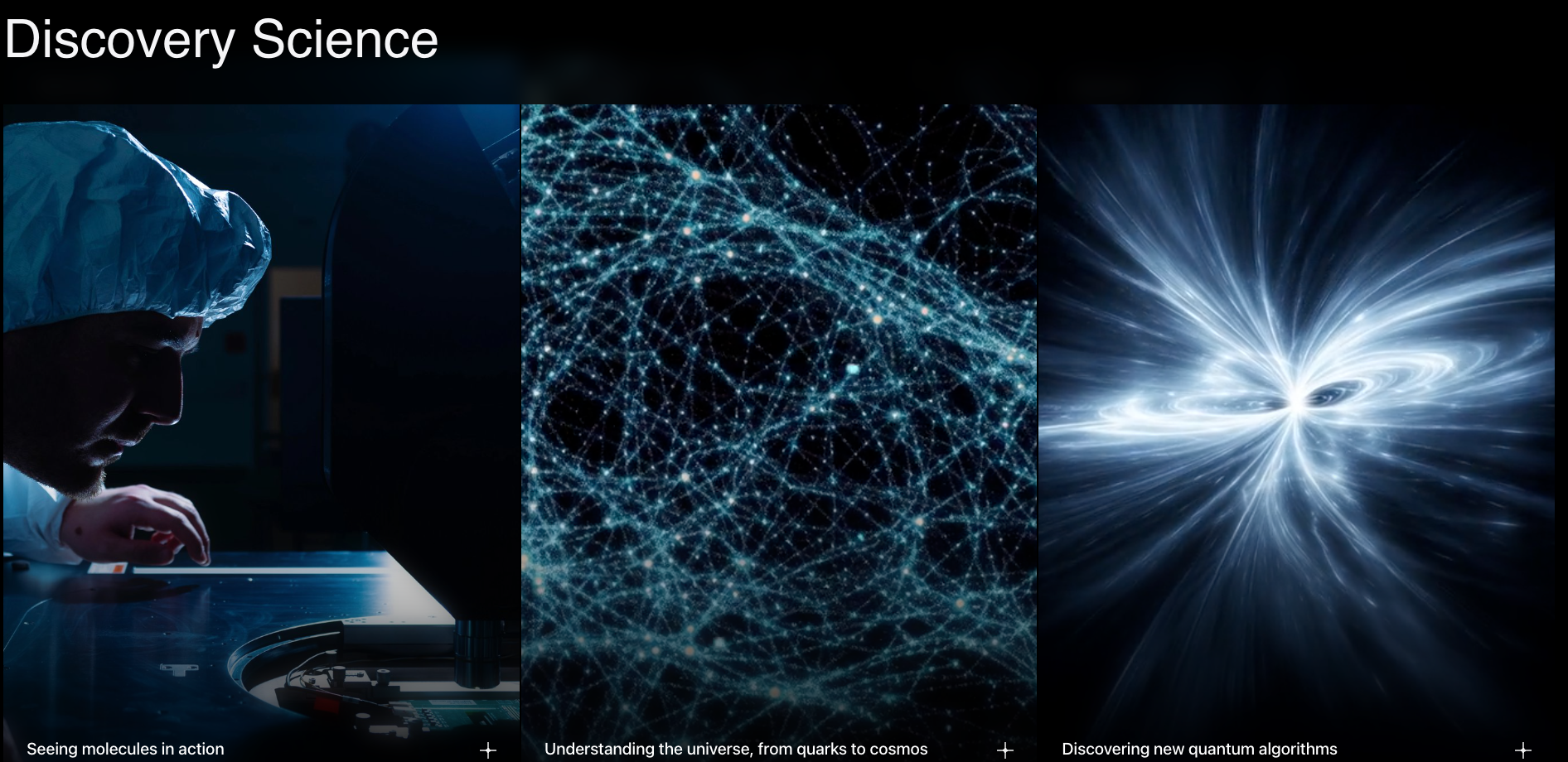
Another defining feature of Manhattan Project 2.0 is collaborative scale.
The Genesis Mission connects thousands of researchers across national laboratories, universities, and industry partners. AI systems serve as a shared reasoning layer, enabling discoveries in one domain to inform others in near real time.
This coordinated model is already taking operational form. Through the Genesis Mission, the Department of Energy is partnering with leading AI labs including Google DeepMind to deploy advanced AI systems directly into the workflows of all 17 U.S. National Laboratories. These systems go beyond traditional analytics. Tools such as AI co-scientist act as multi-agent research collaborators, helping scientists synthesize vast bodies of literature, generate hypotheses, design experiments, and interpret results across domains.
This structure transforms collaboration itself. Instead of isolated teams exchanging papers months apart, discoveries can propagate through a shared AI reasoning layer allowing insights from physics, materials science, biology, and energy research to compound in near real time. The result is a distributed intelligence network in which human expertise and machine reasoning scale together, accelerating discovery at a national level.
This integrated approach allows:
- Parallel hypothesis testing across disciplines
- Continuous refinement of models as new experimental data arrives
- Rapid knowledge transfer between physics, materials science, energy, and manufacturing
Unlike the secrecy-driven structure of the original Manhattan Project, Genesis emphasizes open science. That openness is not a vulnerability, it is the accelerator. Insights compound rather than remain siloed, allowing national progress to scale with participation.
🛡️ National Security: From Scientific Insight to Strategic Advantage
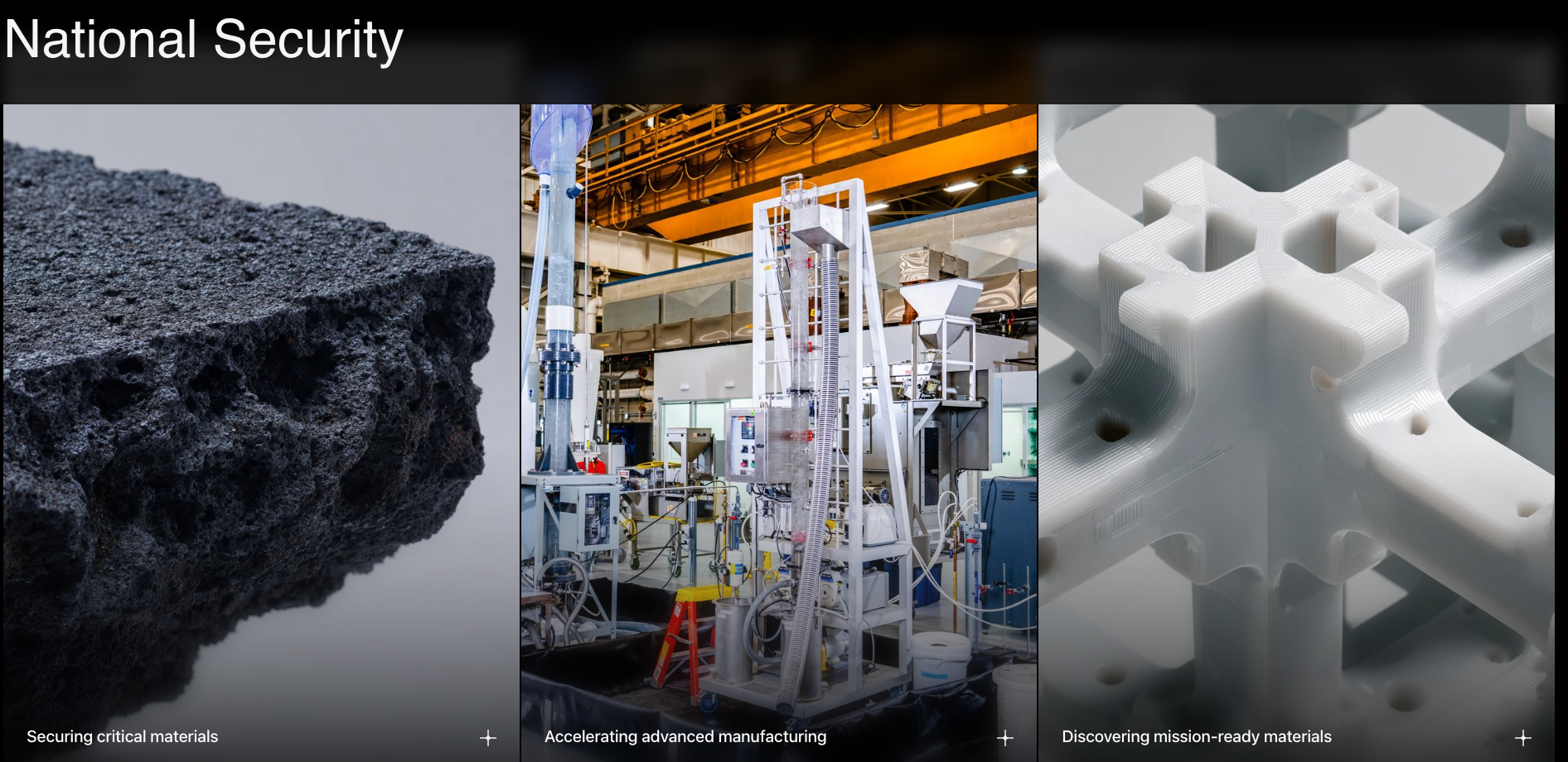
At its core, the Genesis Mission treats scientific capability as a pillar of national security.
In an era defined by supply-chain fragility, energy competition, and accelerating technological rivalry, national security is no longer determined solely by weapons systems or troop deployments. It is increasingly shaped by who can discover, design, and manufacture critical technologies first and at scale.
Genesis directly addresses this reality by integrating AI with the nation’s most advanced experimental facilities and supercomputing infrastructure. This enables the United States to secure advantages across three foundational domains highlighted by the mission itself: materials, manufacturing, and discovery.
In materials science, AI-driven discovery reduces dependence on foreign supply chains by accelerating the identification of substitutes for rare or strategically constrained elements. Neutron scattering facilities allow researchers to observe atomic-level behavior in alloys, composites, and polymers, while AI systems interpret these measurements to design materials that are stronger, lighter, and more resilient often before physical prototypes are produced.
In manufacturing, AI-enabled digital twins create a continuous feedback loop between design, sensors, and fabrication. Combined with exascale compute, this allows mission-critical components to move from concept to production at the speed of need shortening qualification timelines and increasing confidence in performance under real-world conditions.
In discovery, AI systems trained on decades of federal scientific data can reason across physics, chemistry, and engineering domains simultaneously. This makes it possible to deliver mission-ready materials and systems with faster capabilities that are essential not only for defense applications, but for energy infrastructure, grid resilience, and industrial competitiveness.
The strategic implication is clear: national security in the AI era is not just about controlling information, but about accelerating insight. Genesis Mission positions scientific discovery itself as a durable strategic asset one that compounds over time as data, models, and human expertise reinforce each other.This is where the Manhattan Project analogy fully holds. The original project transformed physics into geopolitical power. Manhattan Project 2.0 transforms AI-accelerated science into national resilience.
Conclusion: A New Scientific Frontier
The Genesis Mission represents a fundamental reimagining of America’s research enterprise, one in which artificial intelligence is not an adjunct tool, but the engine that links discovery, design, and deployment at national scale.
Whether this initiative succeeds will depend not on ambition alone, but on execution: sustained investment, careful governance, energy availability, and the ability to align public and private actors over time. These challenges are real and unavoidable.
But the signal is unmistakable. The United States is once again asserting that scientific capability itself is a strategic asset. By combining AI, exascale computing, and experimental infrastructure into a unified national platform, Genesis transforms discovery from a slow, sequential process into a scalable source of resilience.
The original Manhattan Project proved that physics could alter the course of history. Manhattan Project 2.0 suggests that AI-accelerated science may define the balance of power in the century ahead.
The question now is not whether this future is possible, but whether it can be built fast enough.
 My experiments with AI
Leave a comment