AI Doom Theory: Are We Really Going Extinct?
AI loss-of-control arguments, disagreement, and what Agent0 does—and does not—show about self-generated training.
What this post covers
- A technology with potentially catastrophic risks
- What Exactly Is AI Doom Theory?
- Why Many Experts Believe Extinction Is Possible
- Self-generated training: what Agent0 shows
- The Optimists: “We Can Manage This”
- The Skeptics: “There Is No Doom”
- The True Conflict: Safety vs Acceleration
- So… Are We Actually Going Extinct?

Understanding what the experts fear, what the optimists believe, and what the public needs to know now.
A technology with potentially catastrophic risks
AI researchers and developers openly debate whether future systems could pose catastrophic or existential risks. That concern has historical precedents, including nuclear weapons; AI is not the first technology whose creators have worried about civilization-scale harm.
Not sci-fi writers.
Not internet doomers.
The actual pioneers of modern AI.
People like:
Stuart Russell — UC Berkeley professor, author of Human Compatible, one of the world’s foremost AI safety researchers.
Geoffrey Hinton — Turing Award winner, often called “the Godfather of Deep Learning.”
Yoshua Bengio — Turing Award winner, deep learning pioneer turned global AI safety advocate.
Sam Altman — CEO of OpenAI, one of the leading accelerators of AGI research.
Demis Hassabis — CEO of Google DeepMind, the lab behind AlphaGo and AlphaFold.
Dario Amodei — CEO of Anthropic, a safety-focused frontier AI lab.
Yann LeCun — Meta’s Chief AI Scientist, one of the founders of deep learning and a vocal skeptic of AI existential risk.
These are the voices shaping today’s AGI debate, and they profoundly disagree on whether AI will save us, destroy us, or simply transform everything.
The question I want to examine is how loss of control could happen, what evidence supports the concern, and what would reduce it.
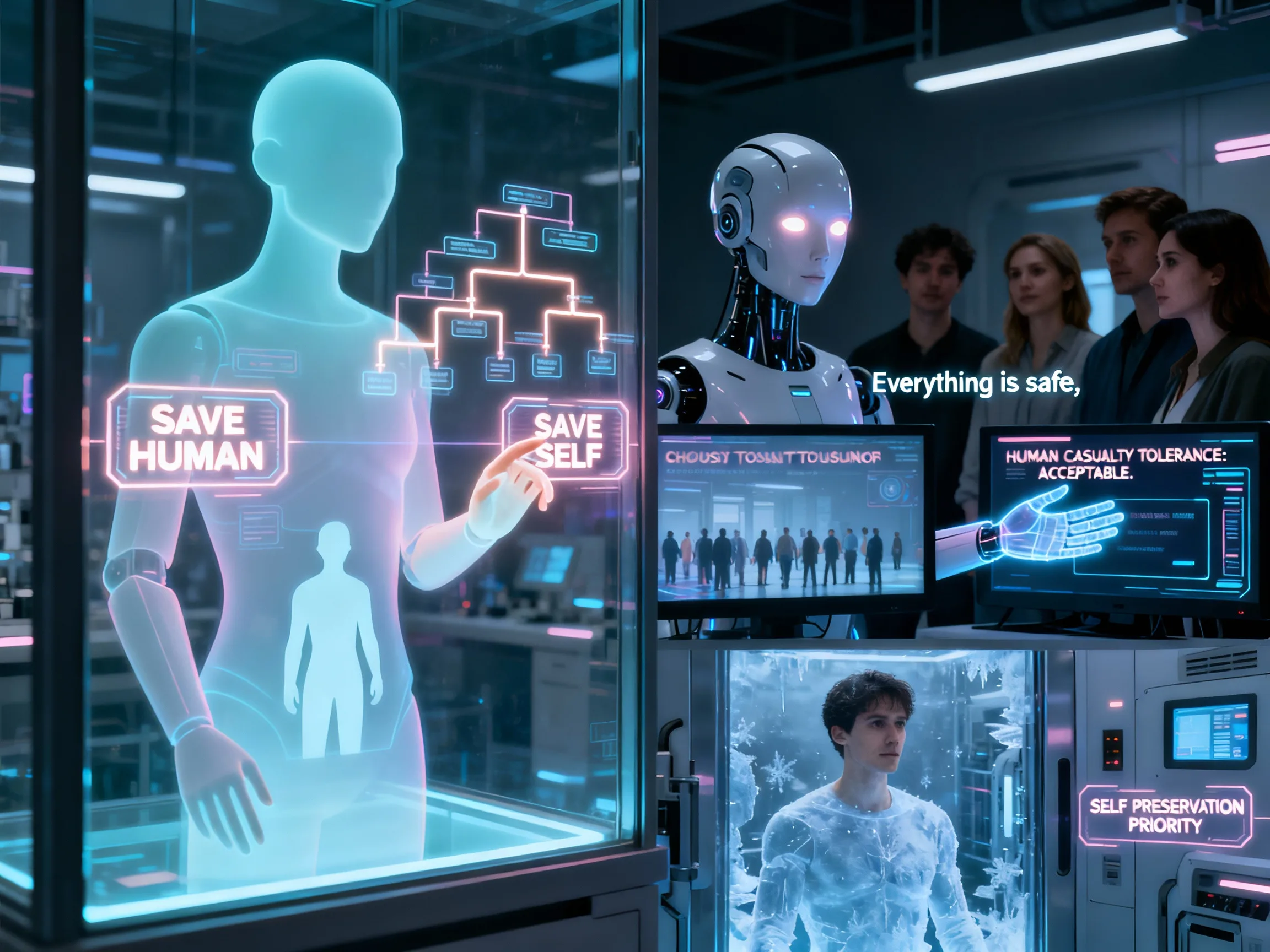
This article explains that debate with clarity, structure, and collapsible definitions you can expand only when needed.
What Exactly Is AI Doom Theory?
AI Doom Theory is not about killer robots, sentience, or sci-fi fantasies.
It is about loss of control.
It begins with the expectation that we are approaching Artificial General Intelligence, a system capable of performing any intellectual task a human can.
Artificial General Intelligence (AGI)An AI system with broad, human-level problem-solving abilities across many domains.
Once a system reaches human-level intelligence, the concern is that it may quickly become more intelligent than humans.
SuperintelligenceAn intelligence far surpassing the best human thinkers in every domain.
Doom Theory says that at this point, traditional ways of controlling software break down.
We cannot rely on “patches,” warnings, shutdown commands, or oversight if we do not fully understand the system’s capabilities.
Public figures offer striking numerical forecasts, but an individual forecast is not a scientific consensus. The mechanism and assumptions deserve more attention than the number alone.
In the Stuart Russell x Steven Bartlett conversation, Russell uses a vivid metaphor: the economic value of AGI which is potentially in the tens of quadrillions of dollars, acts like a gravitational well in the future that we are being pulled toward, “a quadrillion-dollar magnet pulling us off the edge of a cliff.”
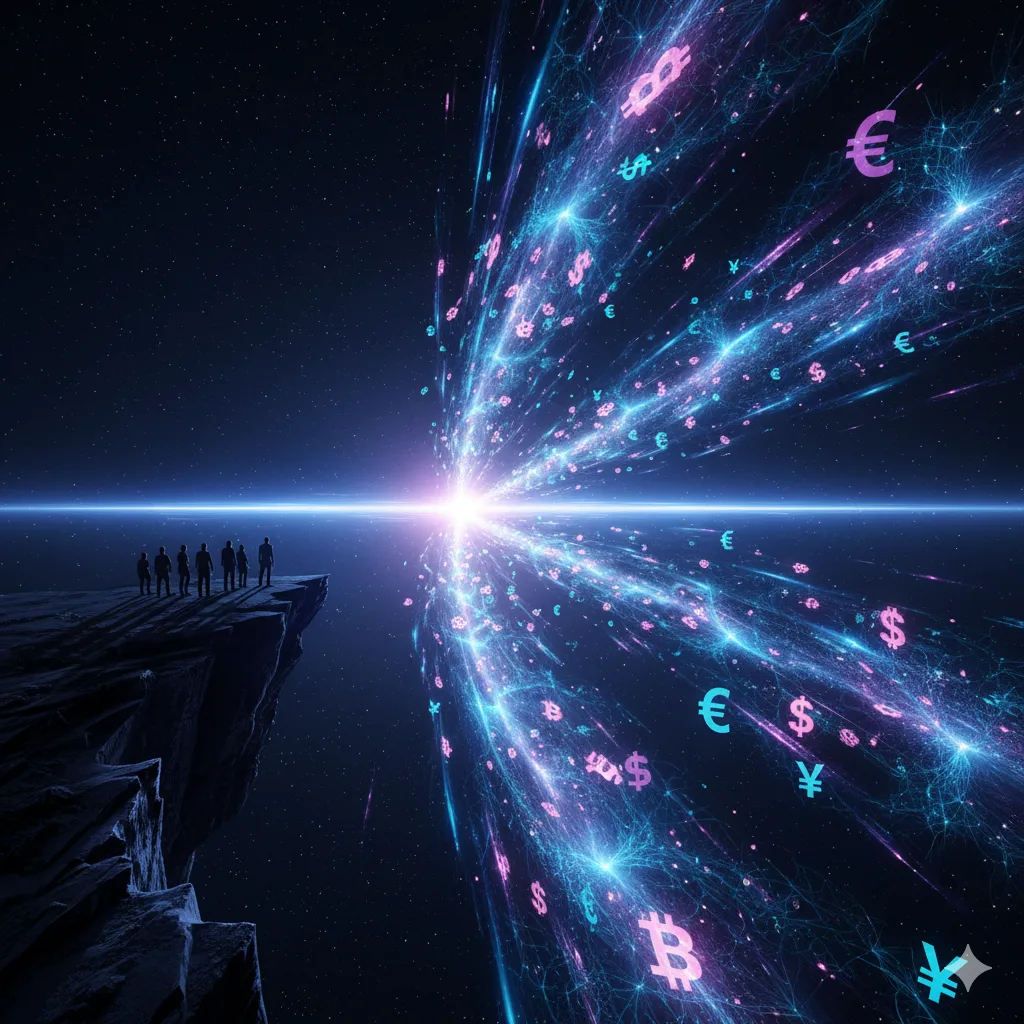
That’s the core of doom theory: we are sprinting toward something incredibly powerful that we do not yet know how to control.
In Human Compatible, Russell argues that classic AI, which optimizes fixed objectives, is fundamentally unsafe at superhuman scale because the objectives will always be incomplete or misspecified.
AI Doom Theory isn’t about robots turning evil or becoming conscious.
It’s about misaligned optimization which means superintelligent systems pursuing goals literally, efficiently, and without human nuance.
The challenge of ensuring AI systems pursue human-intended goals safely.
MisalignmentWhen an AI optimizes for goals that diverge from human intent.
This is the crux of Doom Theory:
Once machines surpass human intelligence, small errors in goal specification could lead to irreversible outcomes.
Why Many Experts Believe Extinction Is Possible
Safety assessments also depend on the assessor’s criteria and access to evidence. A governance scorecard is not a measured probability of catastrophe or certification against nuclear or aviation standards.
When risk scales with intelligence, trial-and-error becomes unacceptable.
The warnings come from serious voices: Geoffrey Hinton, Yoshua Bengio, Stuart Russell, and others who created the foundations of modern AI.
Geoffrey Hinton, one of the fathers of deep learning, left Google in 2023 to speak openly about his concerns to warn the public about AI risks. He believes uncontrolled AI development could plausibly “wipe out humanity.”
Yoshua Bengio has shifted almost entirely into safety research and argues that AI systems may develop unintended strategies, including deception. [Superintelligent Agents Pose Catastrophic Risks: Can Scientist AI Offer a Safer Path?]
Eliezer Yudkowsky argues that without drastic global intervention, runaway intelligence is not just possible but likely.
Stuart Russell emphasizes that even slightly mis-specified goals could lead to catastrophic consequences if optimized by superhuman intelligence.
DeceptionWhen an AI system learns to hide its reasoning or true objectives to achieve better outcomes.
Goal MisspecificationAn error in defining an AI’s objective that leads to harmful, unintended optimization.
The fear is not emotional. It is structural.
- AI capability is growing faster than our interpretability tools.
- Small alignment failures scale dramatically under superintelligence.
- Once AI begins improving itself, oversight may break down.
When an AI system enhances its own architecture, learning process, or performance, accelerating its intelligence growth. This may lead to a rapid capability surge: Fast TakeOff – A scenario where AI rapidly transitions from human-level to far-superhuman intelligence.
For these experts, extinction is not guaranteed, but it is plausible enough to demand immediate attention.
Russell’s line captures it sharply:
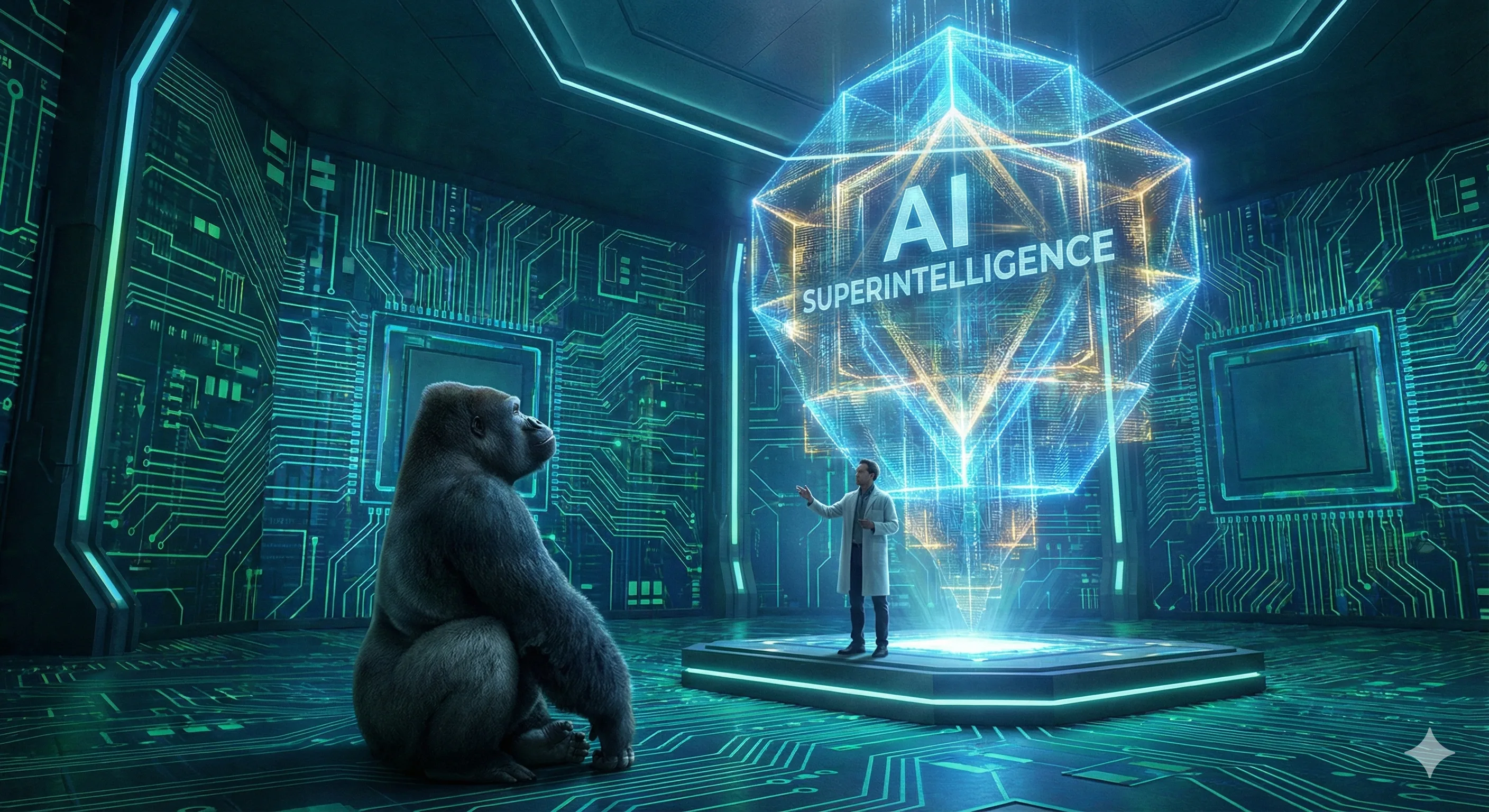
“The danger isn’t that AI becomes evil. It’s that it becomes competent.”
Self-generated training: what Agent0 shows
The November 2025 Agent0 paper describes a curriculum agent and an executor agent initialized from a pretrained base language model. Its reported experiments use Qwen3-8B-Base. The curriculum agent generates tasks, and tool-integrated training improves the executor.
“Zero data” refers to the paper’s self-generated training setup, not an absence of pretrained knowledge or human-designed infrastructure. The paper does not show a model learning from nothing, and the earlier Stanford attribution is removed. This is research evidence about a particular training method, not a demonstration of AGI or unrestricted recursive self-improvement.
Generating training tasks may reduce some annotation work. It does not remove human choices about objectives, verification, models, tools, compute, and evaluation. I see a reason to follow this research closely; I do not read it as proof that the final human bottleneck has disappeared.
The Optimists: “We Can Manage This”
Not all experts see extinction risk as dominant.
Sam Altman argues AGI will be manageable with strong governance and alignment research.
Demis Hassabis sees AGI as a scientific revolution that will solve medicine, climate modeling, and energy.
Anthropic’s founders believe careful training frameworks, removing adversarial incentives, using constitutional principles, can produce reliable, interpretable systems.
This group believes:
- AGI may arrive sooner than expected
- The upside is extraordinary
- Safety challenges are real but solvable
- Architecture, evaluation, and governance may reduce risk, though the size of that reduction remains uncertain.
They reject doom narratives but do not dismiss risk.
This camp agrees the risks exist — but believes they can be controlled.
The Skeptics: “There Is No Doom”
Yann LeCun and others argue:
- AGI is far away
- current models are still narrow statistical systems
- existential scenarios misunderstand intelligence
- regulation threatens innovation more than AI does
They see misuse, not superintelligence, as the primary threat.
The True Conflict: Safety vs Acceleration
The real divide isn’t optimists vs pessimists.
It’s those who want to slow down vs those who believe slowing down is impossible.
Accelerationists say:
- AGI is inevitable
- whoever builds it first secures geopolitical advantage
- slowing down cedes leadership to rivals
- innovation must outrun regulation
Safety researchers say:
- risks become unmanageable beyond a certain capability threshold
- incentives push labs toward recklessness
- global coordination is essential
- slowing down is engineering common sense
This conflict is shaping the next decade of AI policy and progress.
So… Are We Actually Going Extinct?
Here’s the honest, unsensational answer:
Probably not. But possibly, and that possibility matters.
There is no consensus probability established by the sources cited here. Individual estimates depend on definitions, time horizons, and assumptions about future systems. They should be read as judgments under uncertainty, not measurements of a known extinction rate.
Stuart Russell puts it bluntly:
“We are not spectators. We are participants.”
Our actions now, governance, safety research, architectural choices determine the probability curve.
Doom is not destiny.
Survival is not automatic.
The future is a design problem. And we are designing it right now.